We all like simple solutions. However much we may believe we are ‘above’ black-&-white dichotomies, that of course we understand that every situation is complex, nevertheless we have a brain that can only think of a very very few things at once. So it's unsurprising that we are drawn to solutions that can be summed up simply, that can fit comfortably within the limitations of working memory.
Articles
The use of worked examples
We're all familiar, I'm sure, with the use of worked-out examples in mathematics teaching. Worked-out examples are often used to demonstrate problem-solving processes. They generally specify the steps needed to solve a problem in some detail. After working through such examples, students are usually given the same kind of problems to work through on their own. The strategy is generally helpful in teaching students to solve problems that are the same as the examples.
Brain autopsies have revealed that a significant number of people die with Alzheimer’s disease evident in their brain, although in life their cognition wasn’t obviously impaired. From this, the idea of a “cognitive reserve” has arisen — the idea that brains with a higher level of neuroplasticity can continue to work apparently normally in the presence of (sometimes quite extensive) brain damage.
What is it?
Frontotemporal dementia is a disorder of the frontal lobes and includes what was known as primary progressive aphasia. Although it occurs far less often than Alzheimer's disease, among dementia sufferers younger than 65 it is estimated to occur at about the same rate. In other words, frontotemporal dementia is, unlike the most common dementias, not a disorder of age. Most sufferers become symptomatic in their 50s and 60s.
I’ve always been interested in the body’s clocks — and one of the most interesting things is that it is clocks, in the plural. It appears the main clock is located in a part of the brain structure called the hypothalamus (a very important structure in the brain, although not one of much importance to learning and memory). The part of the hypothalamus that regulates time is called the suprachiasmatic nuclei. These cells contain genes that switch on, off, and on again over a 24-hour period, and send electrical pulses and hormones through the body. This is the body’s master clock.
Vocabulary is a sticking point for many language learners. That’s because words have a certain arbitrary quality that makes them hard to memorize. There are two strategies which are very effective with this task: the keyword mnemonic, and retrieval practice. I have written about these extensively in my books Mnemonics for Study, and How to revise & practice.
This post is the fourth and last part in a four-part series on how education delivery is changing, and the set of literacies required in today’s world. Part 1 looked at textbooks; Part 2 at direct instruction/lecturing; Part 3 at computer learning.. This post looks at learning models and types of literacy.
Literacy. What does it mean?
In a 1987 experiment (1), readers were presented with a text that included one or other of these sentences:
or
Both texts went on to say:
The Suggested Benefits of Homework
The most obvious presumed benefit of homework is, of course, that it will improve students' understanding and retention of the material covered. However, partly because this (most measurable) benefit has not been consistently demonstrated, it has also been assumed that homework has less direct benefits:
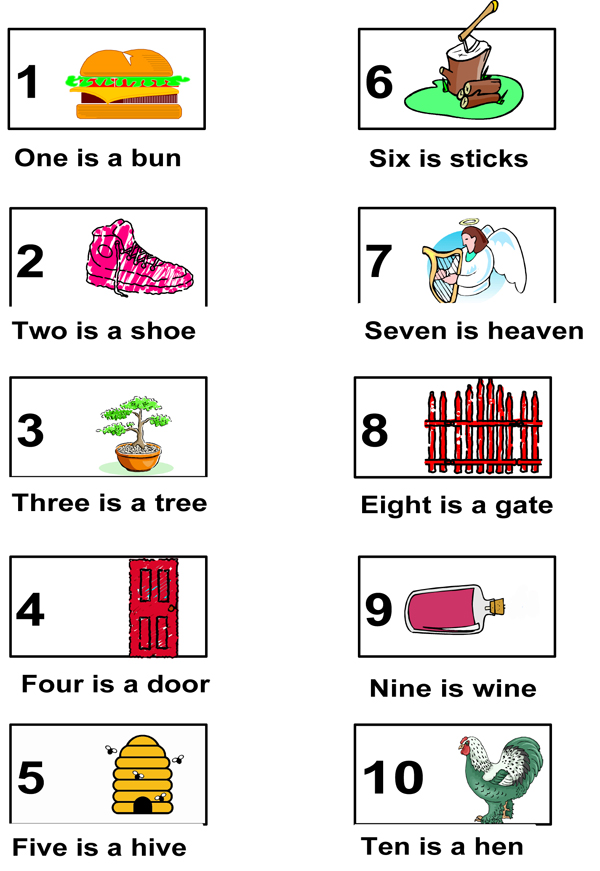
If you have a numbered list to memorize, the best mnemonic strategy is the pegword mnemonic. This mnemonic uses numbers which have been transformed into visual images. Here's the standard 1-10 set.
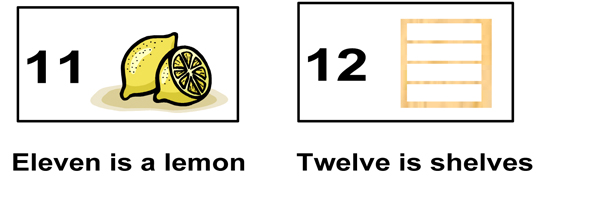
I add two more: