
Articles

To choose a strategy, you must assess the situation. In this case, this may mean an evaluation of a written text. Let's look at how you might evaluate text.

We can classify text at one of three different levels, according to its structure and density1:

Let's look a little deeper into the value of mnemonics for knowledge acquisition. By “knowledge acquisition”, I mean the sort of information you learn from textbooks — information that is not personal, that you need for the long-term.

In this context, I believe the chief value of mnemonic strategies is to help you recall information that needs to be remembered in a particular order. Thus we use mnemonics to help us remember the order of the planets, the order of musical notes on the stave, the order of the colors in a rainbow.
What is a tip-of-the-tongue experience?

The tip-of-the-tongue experience (TOT) is characterized by being able to retrieve quite a lot of information about the target word without being able to retrieve the word itself. You know the meaning of the word. You may know how many syllables the word has, or its initial sound or letter. But you can’t retrieve it all. The experience is coupled with a strong feeling (this is the frustrating part) that you know the word, and that it is hovering on the edges of your thought.

I recently reported on a study showing how the gestures people made in describing how they solved a problem (the Tower of Hanoi) changed the way they remembered the game. These findings add to other research demonstrating that gestures make thought concrete and can help us understand and remember abstract concepts better.

Movement with Meaning: A Multisensory Program for Individuals in Early-Stage Alzheimer's Disease

Those of us in the field of dementia care are reexamining our philosophical beliefs and exploring practical, hands-on approaches in our relationships with individuals living with Alzheimer's disease. We are creating innovative programs and developing a new framework for preserving the emotional health, autonomy, and dignity of those who need us to walk hand in hand with them, witnessing the process of their experiences with empathy and respect.

While parents and teachers have always strongly supported small class sizes, their belief has not always been supported by evidence. Part of the problem lies in that word “small” — what constitutes a small class? Different interventions have looked at reducing class sizes from 40 to 30, or 30 to 25. It may well be that such reductions are not sufficient to show clear benefits.

Find out about the pegword mnemonic

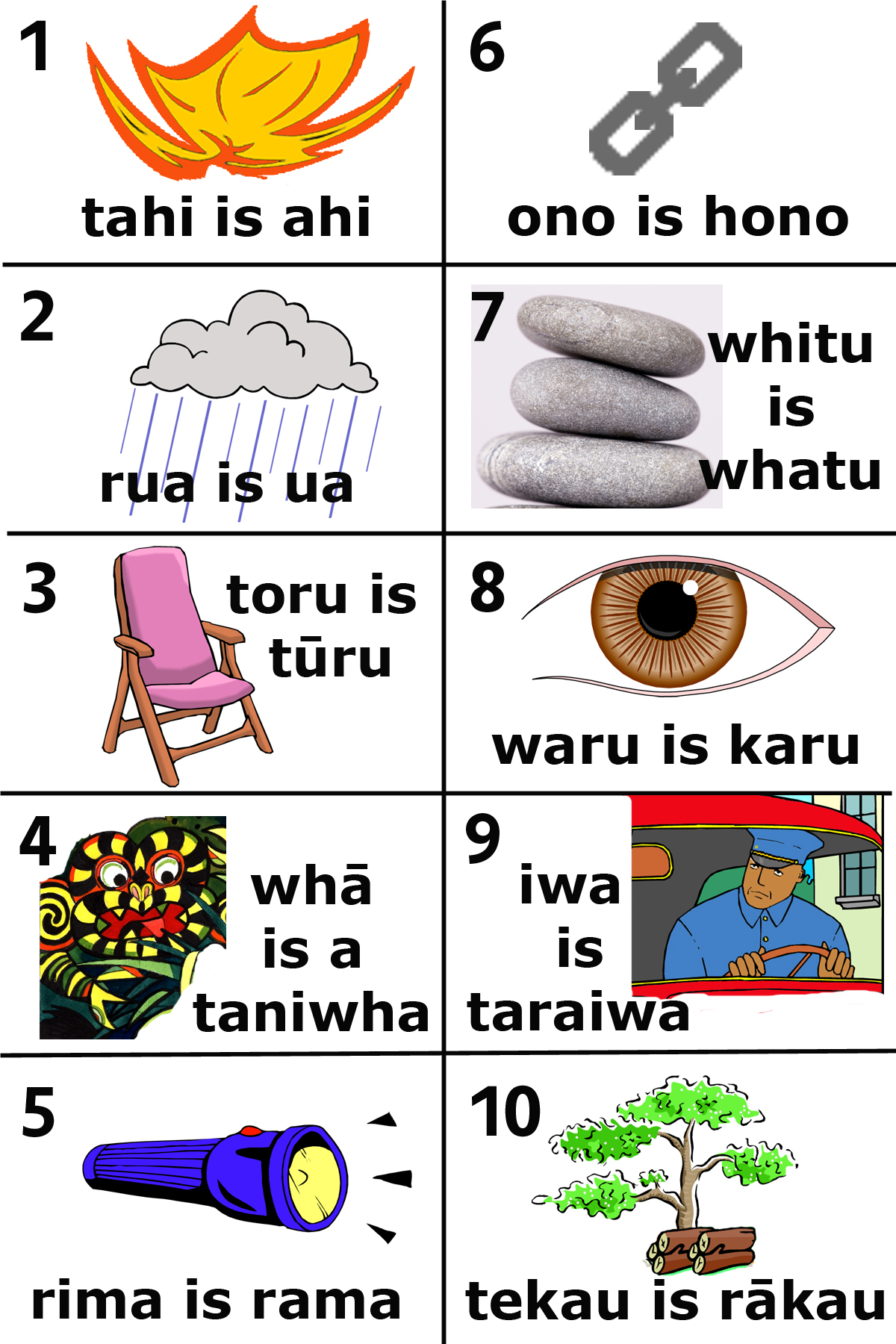
To celebrate Māori Language Week here in Aotearoa (New Zealand), I've put together a pegword set in te reo:

  1. tahi — ahi
  2. rua — ua
  3. toru — tūru
  4. whā — taniwha
  5. rima — rama
  6. ono — hono
  7. whitu — whatu
  8. waru — karu
  9. iwa — taraiwa
  10. tekau — rākau

Maori pegs

What are external memory aids?

External memory aids include such strategies as:

Compulsory Education: When it starts and how long it lasts

Around the world, for the most part, compulsory schooling starts at 6, although some start at 7, and a very few at 5 or even younger. There is less consensus about how long compulsory education should last, but 9 years is the most common length, with 10 years running a close second.

Here are some notes on the water cycle:

Hydrological (water) cycle

Precipitation & flow: “whether they are typhoons or Scotch mists, mountain torrents or field ditches or city sewers, they are simply water sinking back to base level, the sea.”

Evaporation = the act of passively presenting water to the atmosphere to be soaked up + vaporized by the sun’s energy.

Transpiration= evaporation thru plants